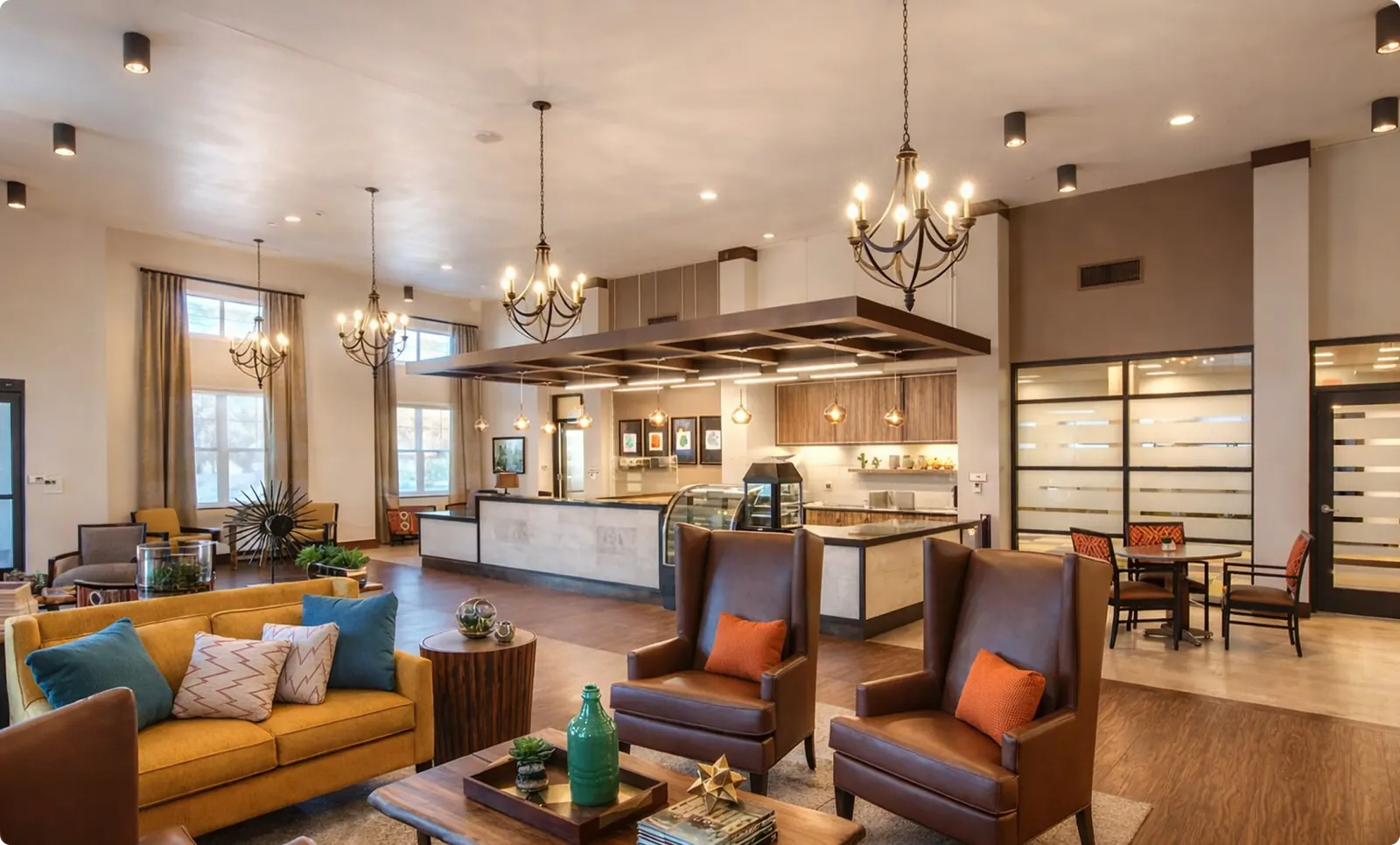
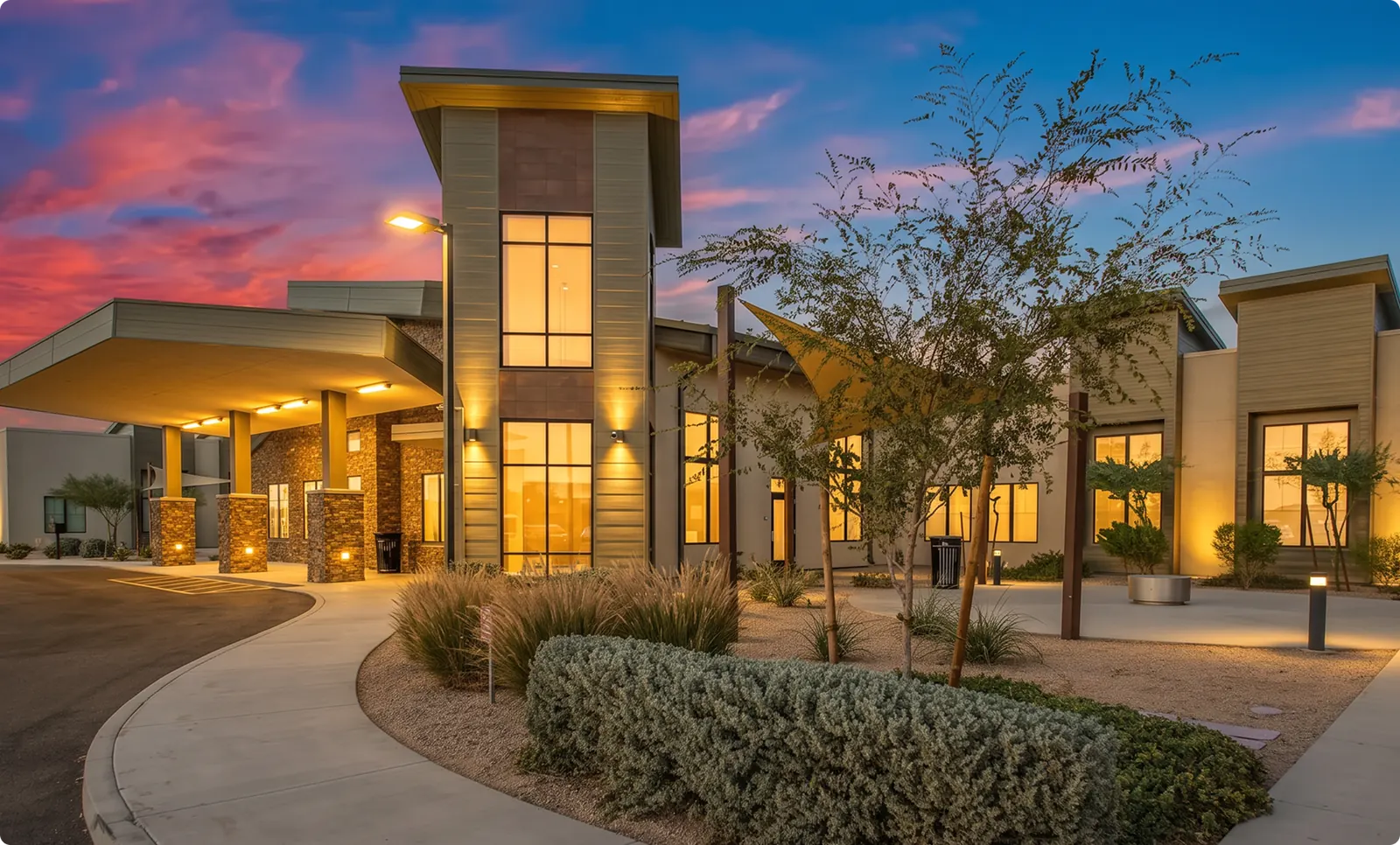
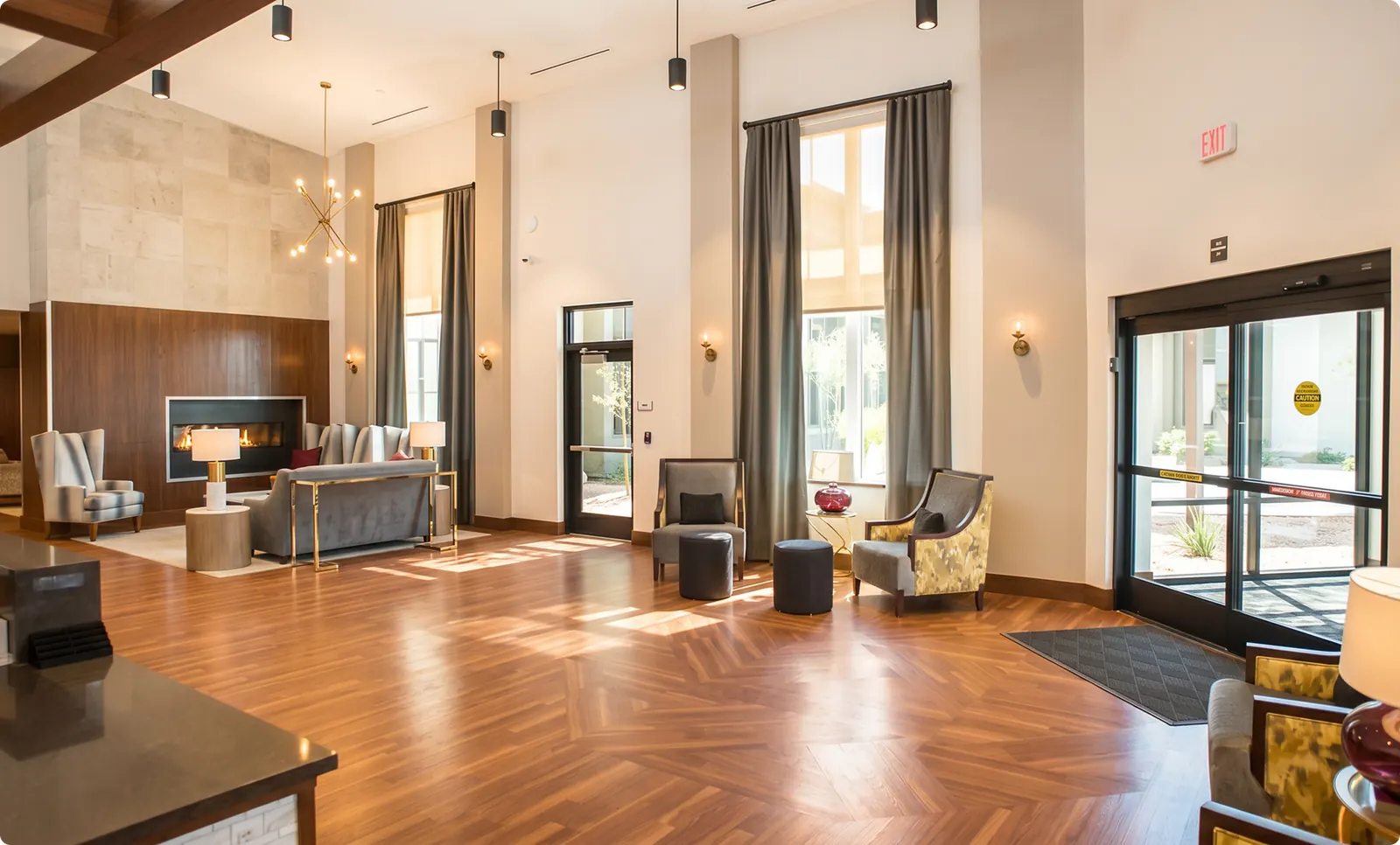
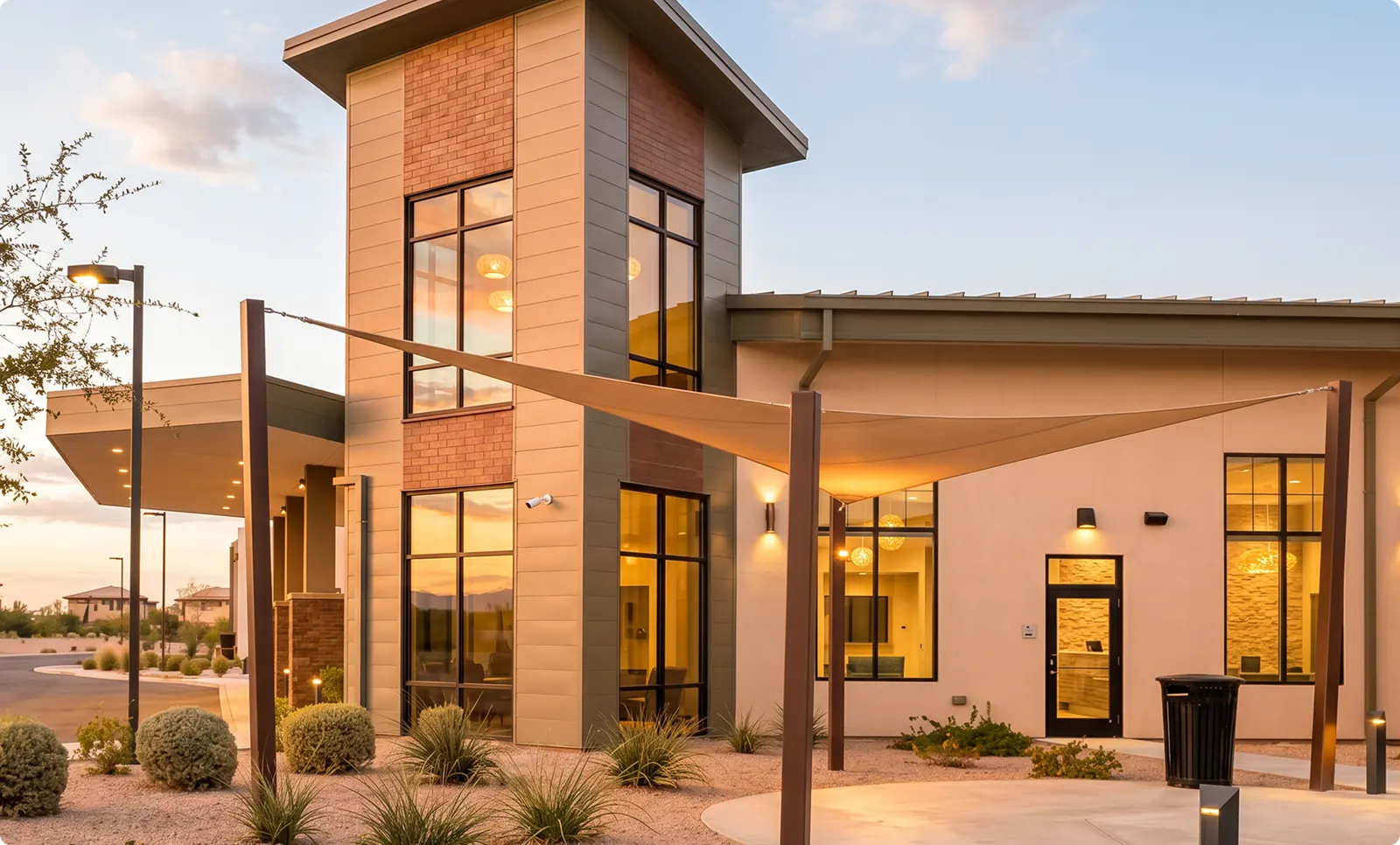
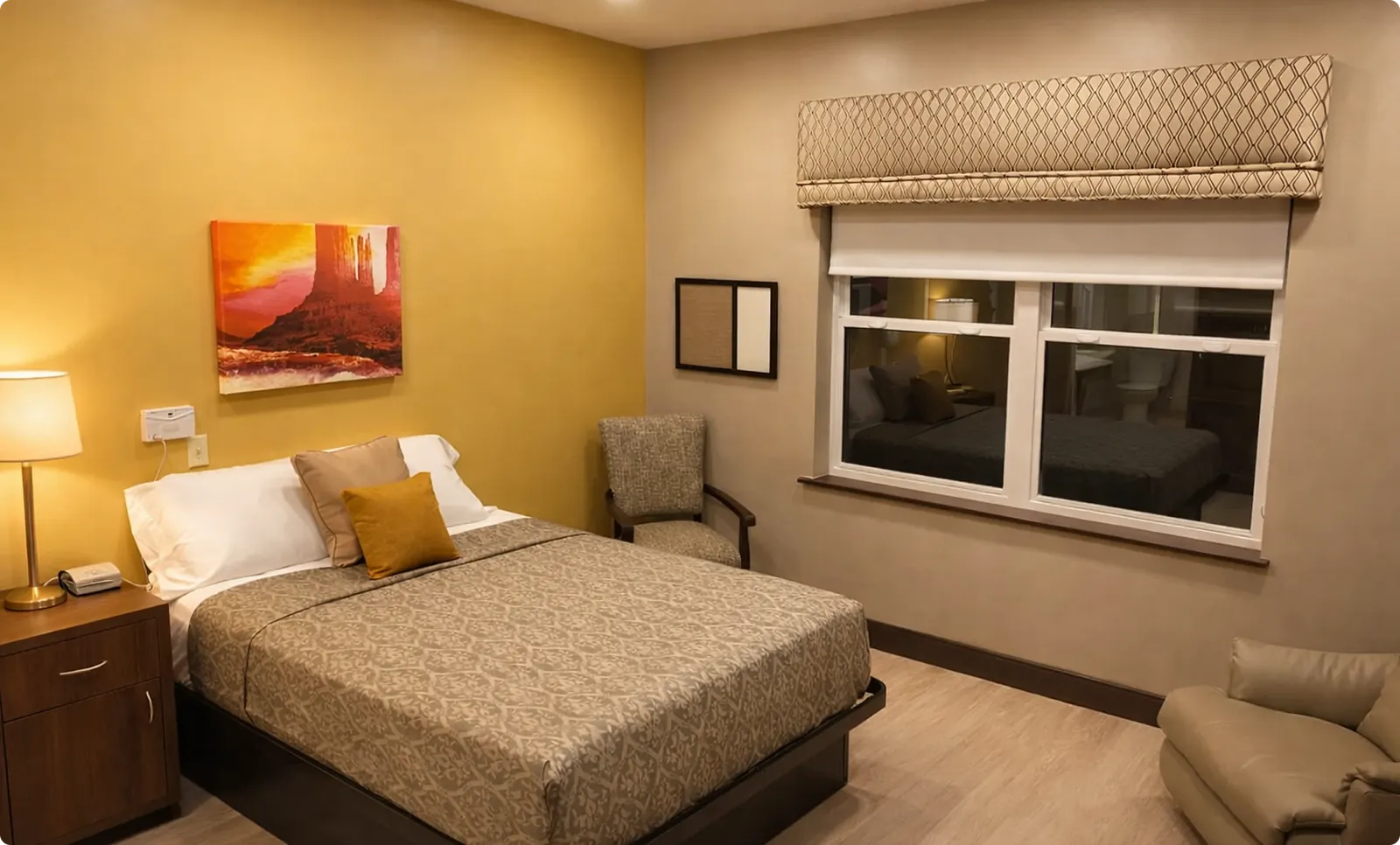
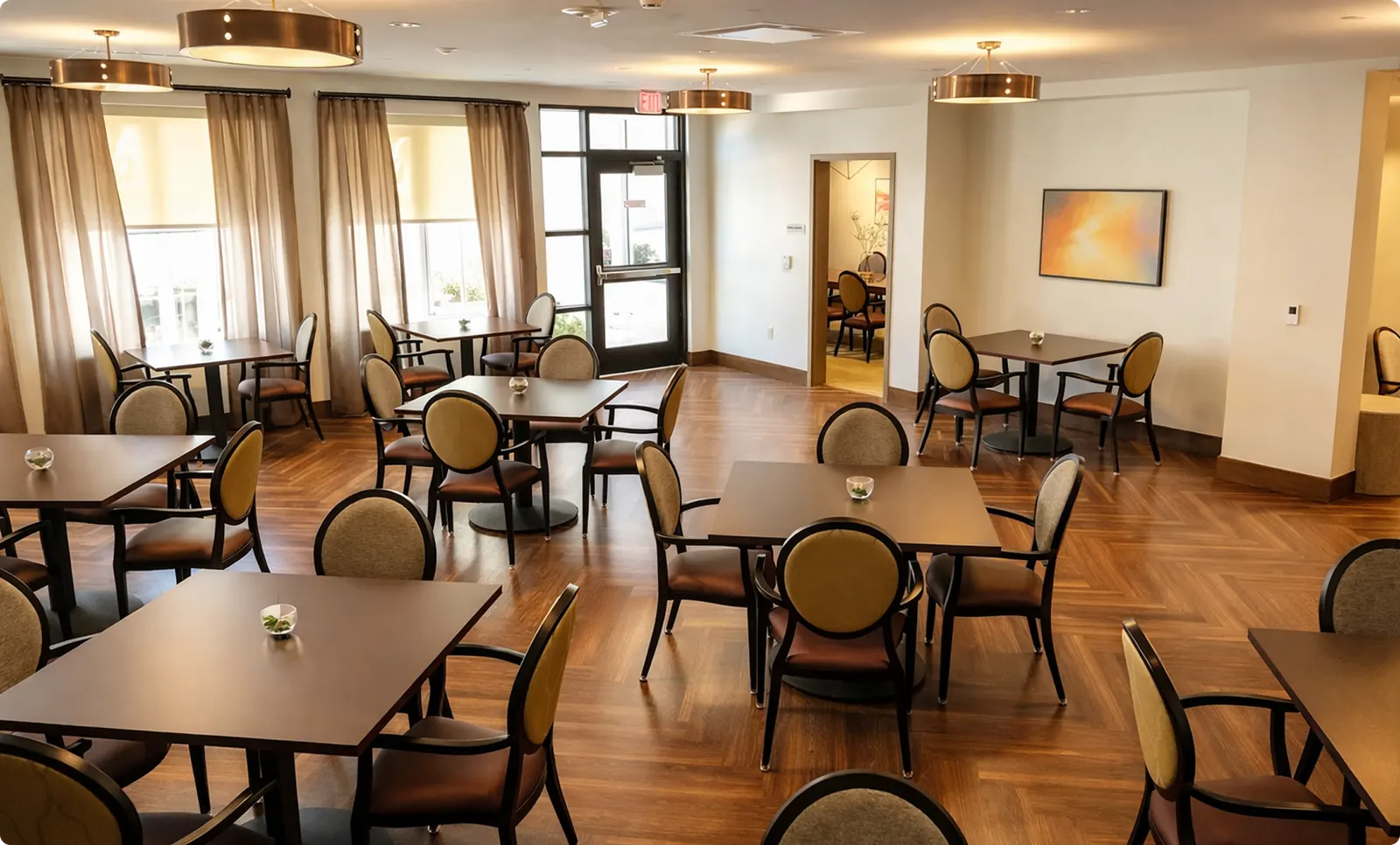
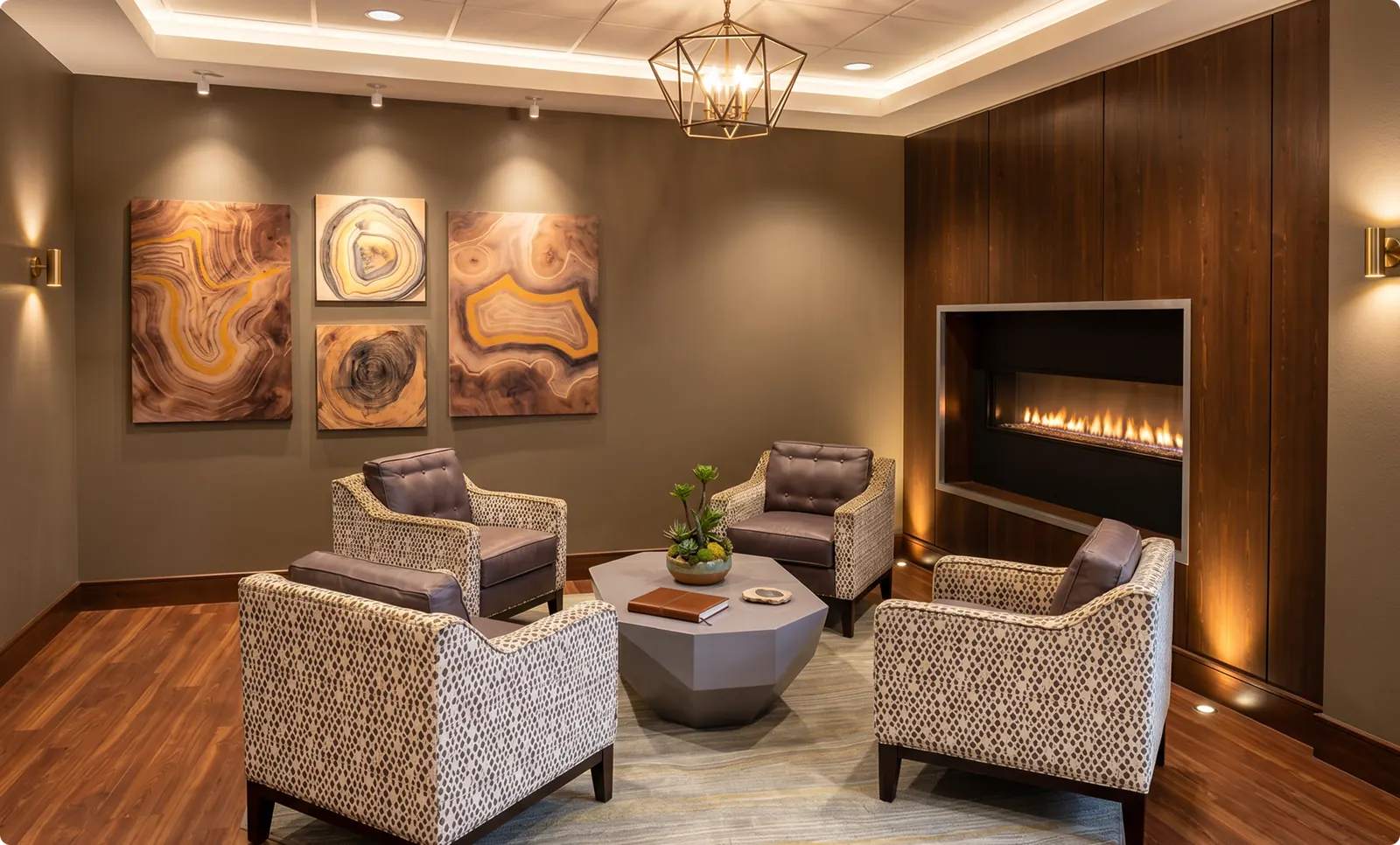
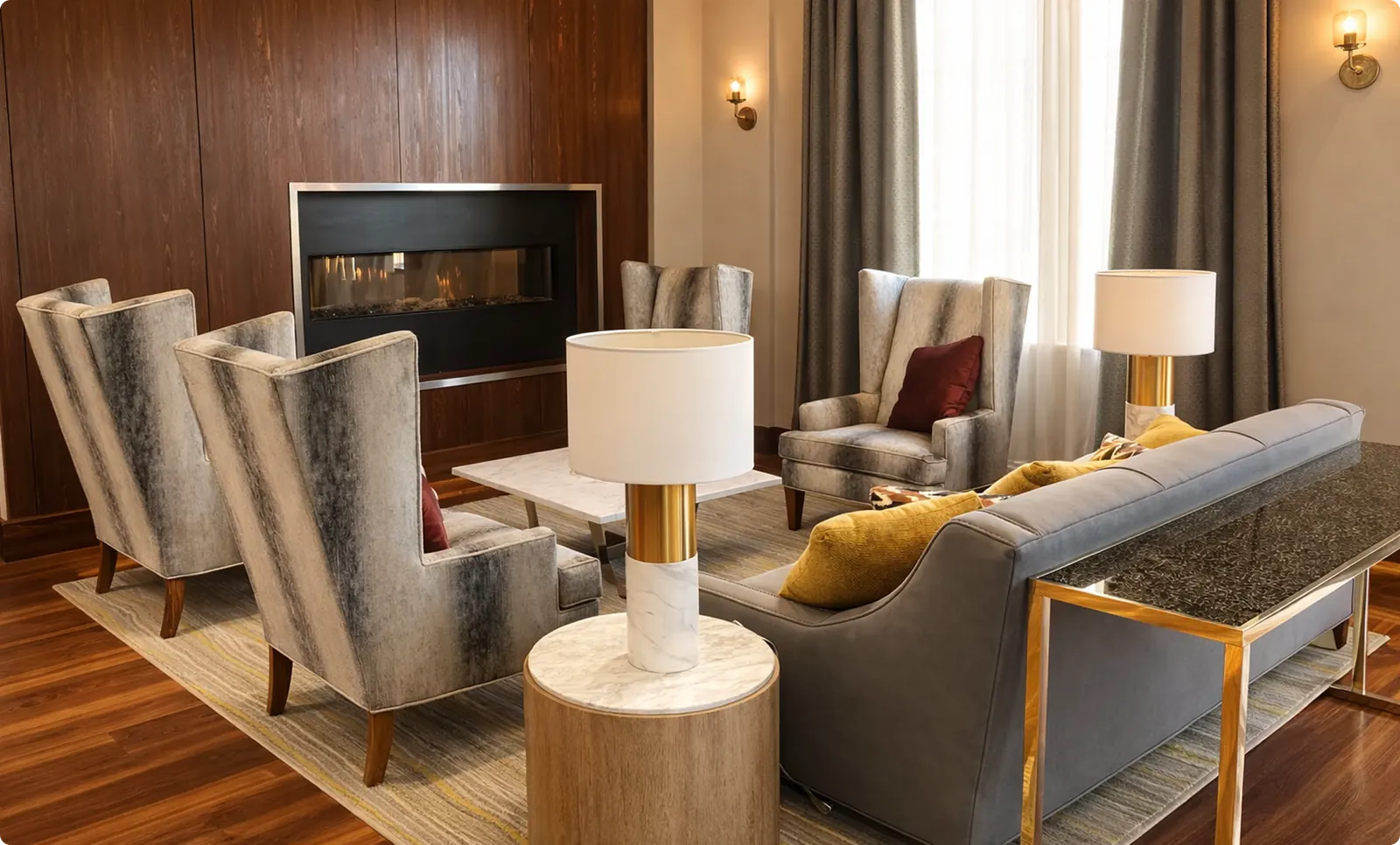
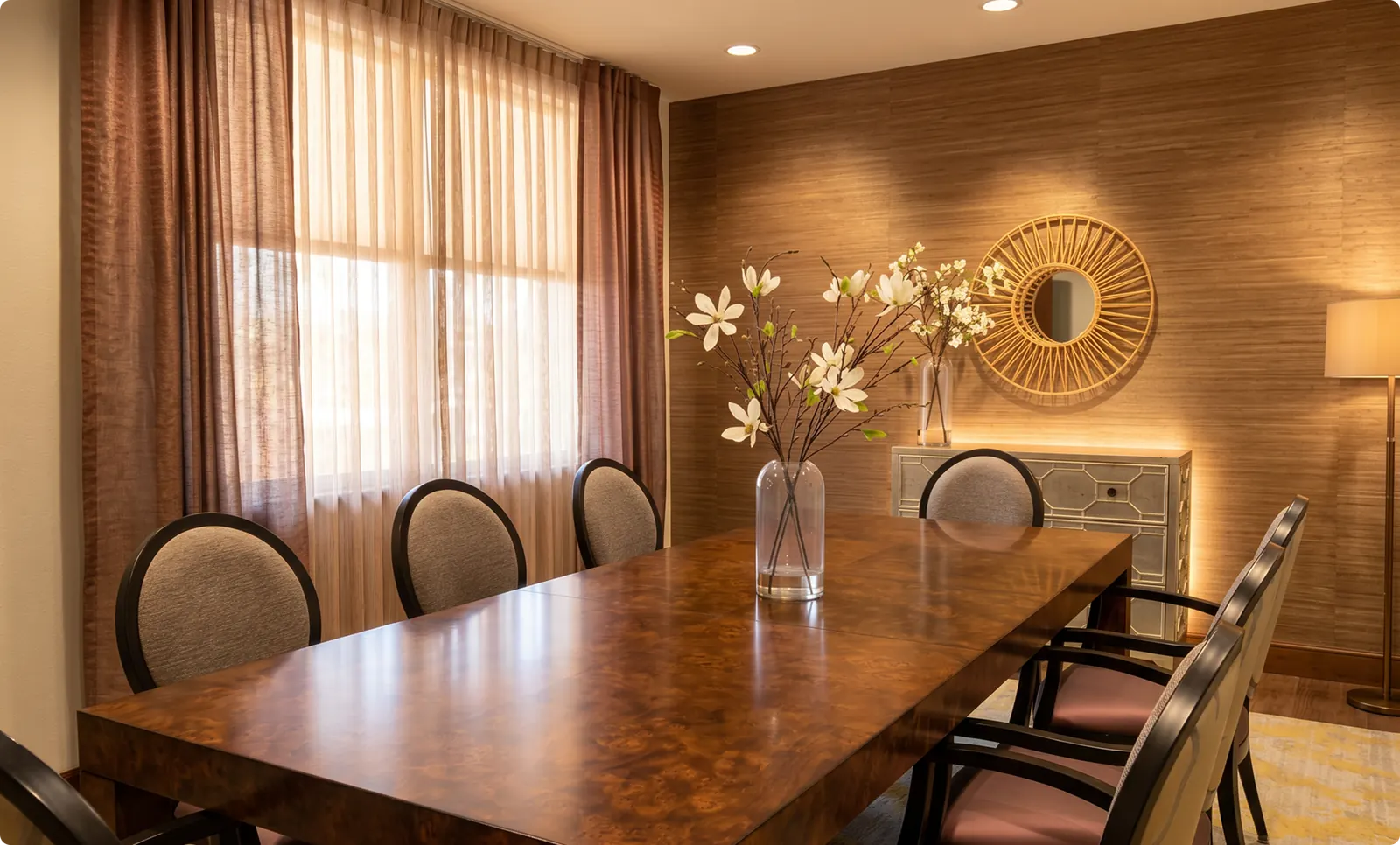
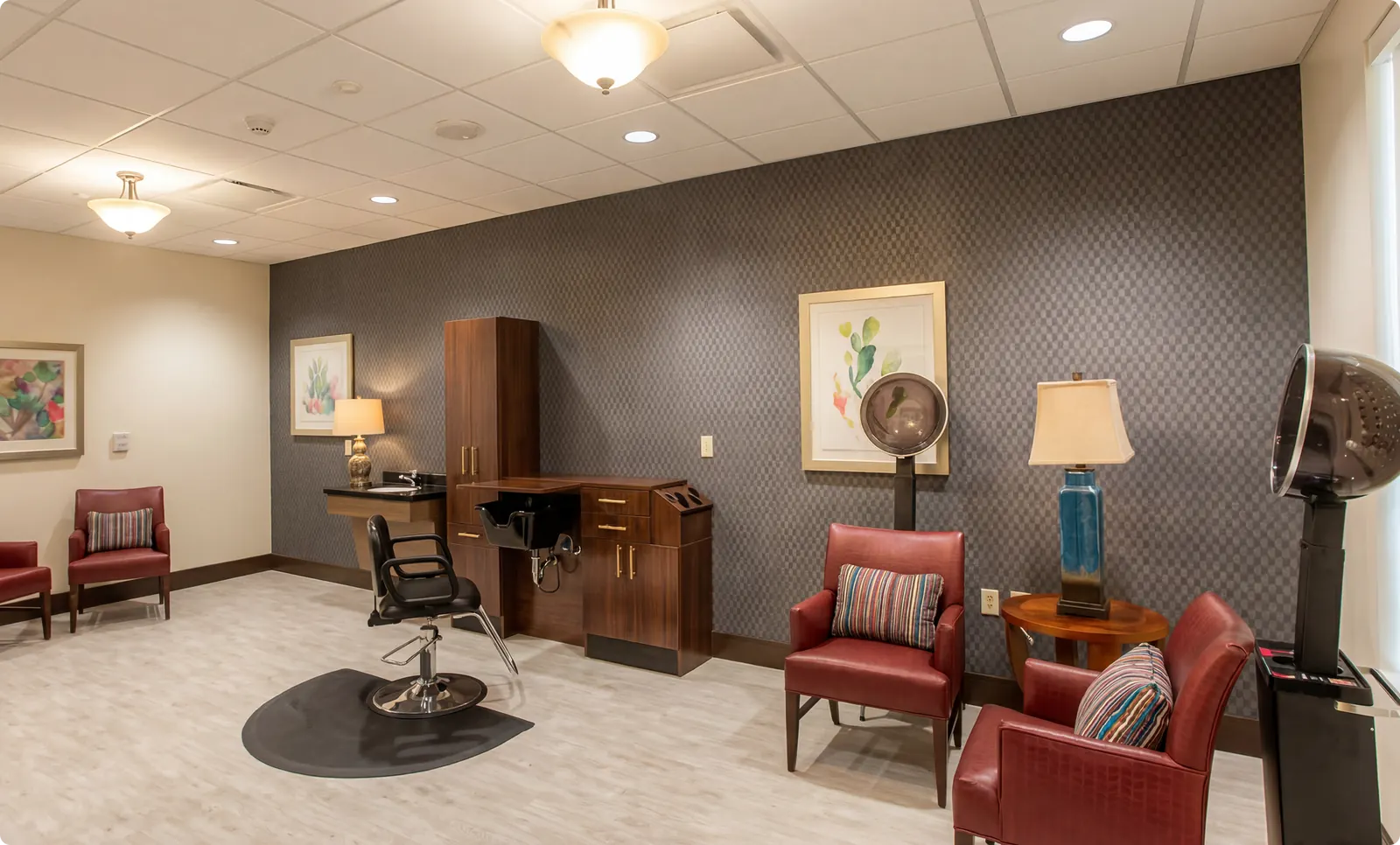
Somewhere to actually sit and breathe between sessions, rather than a corridor and a day room.
Coverage
Does insurance cover residential treatment in Arizona?
We check your benefits while you are on the phone, usually in a few minutes
Insurance verification is free and confidential
AHCCCS and commercial plans both cover residential care here
Not in network with your plan? We will say so, and help you find who is
Plans we work with
Do not see your plan? Call and we will check it. If we are not in network, we will say so and help you find somewhere that is.
Check your coverage now
Takes less than a minute. No commitment required.
Confidential · No pressure · No spam
Accredited and verified
The program
Residential treatment at Buena Vista
You live here for about a month and recovery is the only thing on your calendar. No commute, no shift to cover, nothing at home pulling you back mid-week.
Thirty days is the usual stay, and up to 45 when that is the right call
Group therapy twice a day, plus individual sessions with your own therapist
A case manager assigned from day one, not the week you leave
Optional 12-step meetings, and phone access from 4:00 to 9:00 PM
Coming here is voluntary, and choosing it yourself is one of the strongest predictors of a good outcome
Getting substances safely out of your body and through withdrawal, with nursing around the clock, comfort medication, and a physician overseeing it. Detox looks after your body.
Residential treatment
Typically 30 days
Live-in care that starts once your body is steady. Two groups a day, your own therapist, and a case manager planning what comes after. Residential is where you build the tools.
One continuum, one team. Detox and residential both happen in this building, so you move between them without a second admission, a second facility, or telling your story to anyone new. The case manager you meet on day one stays yours.
Who Residential Is For
Is this the right level of care?
There's no test to pass and no bottom you have to hit first. But if several of these sound like your life right now, residential is likely the level of care that gives you a real chance.
You have tried to stop on your own more than once and it has not held
Home is where the triggers are, and staying sober there feels impossible
Withdrawal has been frightening or medically risky for you before now
Substance use is tangled up with trauma, anxiety, depression, or grief
Outpatient treatment has not been enough structure to keep you steady
You need to step out of your life for a while to get your footing back
What we treat
We treat substance use — and, just as importantly, the mental health conditions that so often come with it. When both show up together, treating them at the same time gives you the best chance at lasting recovery.
Substances
Alcohol
Fentanyl & other opioids
Methamphetamine
Benzodiazepines
Cocaine
Kratom
Co-Occurring Mental Health
PTSD & complex trauma
Bipolar disorder
Anxiety
Depression
Borderline personality disorder
Grief & life stress
What we treat here. Buena Vista is an inpatient detox and residential program for substance use, with mental health care delivered alongside it rather than referred out: trauma, anxiety, depression and bipolar disorder are treated as part of your stay. Tell us what is going on when you call and we will place you where you will do best, here or with the right provider for you.
Our facility
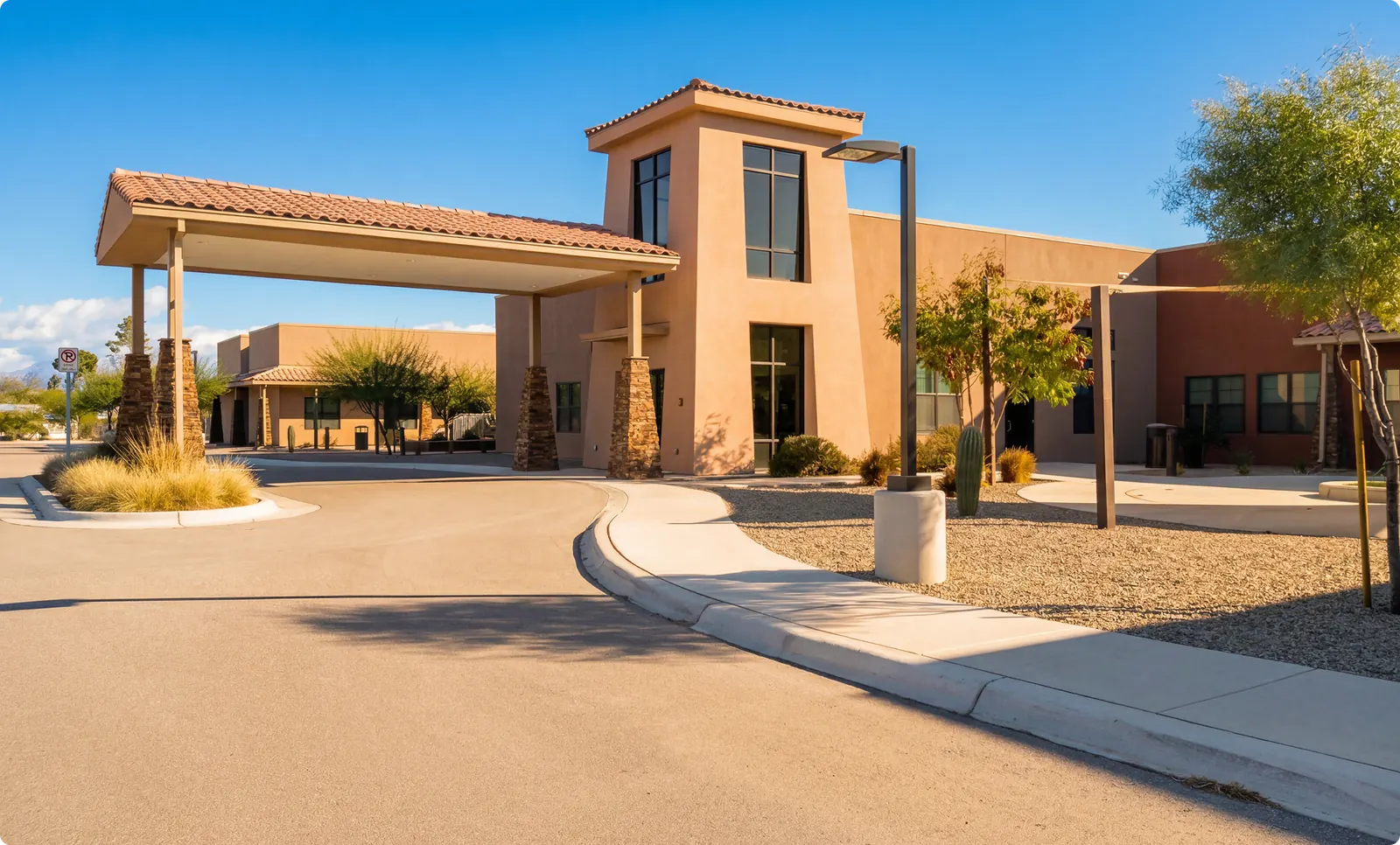
Somewhere you would actually want to sleep
These are our rooms and our common spaces — not stock photography, and not a rendering. It is a real place, and it was built to feel like one.
The Buena Vista Difference
Why people choose to do this work here
Every treatment center says it cares. Here's what our clients point to specifically, in their own words, when they explain what was different.
Treated like a person, not a file
Not a bed number and not a paycheck. This is the most consistent thing our clients say about us, and it is the standard we hold ourselves to every day.
Staff who lived recovery
Many of the people caring for you have walked this road and are in recovery. The empathy is not a script, and most clients say they can tell immediately.
Your own room and bathroom
A private room with a private bathroom, in a space that is clean, calm and comfortable rather than institutional. Dignity is the baseline, not an upgrade.
Meals people rave about
Food comes up almost as often as the clinical program when clients describe their stay. Meals are catered, the menu rotates, and dietary needs are met.
Detox and residential here
You are not handed between strangers at every step. Both levels happen in this building, with case management coordinating what comes next from day one.
A fast, humane intake
The phone is answered day or night and the assessment takes 15 minutes. Transport can be arranged locally, and when a bed is open you can often come today.
A Day in Residential
What your days will actually look like
Your day has a rhythm to it, and that structure is a real part of why residential works. Enough to keep you grounded and moving forward — enough space to actually breathe and think.
1
Morning
Morning group
The day opens with group: how addiction actually works, coping skills, and a room of people who understand it without you having to explain yourself.
2
Through the week
Individual therapy
Sessions with your own therapist, where the more personal work happens: the trauma, the patterns, the things that are harder to say out loud in a group.
3
Afternoon
Second group
A second group session, plus time with your case manager, who starts mapping your life after treatment from day one rather than the week you leave.
4
4:00 to 9:00 PM
Phone access
Your window to call your kids, text your partner, check in with your sponsor. The therapeutic day needs your focus and the evening belongs to you.
5
Evening
Optional meetings
Nightly 12-step meetings for anyone who wants them. Genuinely optional: some people find their footing there, others find it elsewhere, both are fine.
6
Around the clock
Nursing on site
Nursing and support staff are here 24 hours a day, so there is always somebody to go to when you need help, whether that is at 3 PM or at 3 AM.
Want to know what a day looks like for your situation?
Call and ask. We'd rather answer the question than have you spend another night wondering.
"Buena Vista was great for me. Comfortable, good groups, great staff. If I need to return I know they are there. And I'd recommend this place to anyone in need of recovery from addiction. Lolo at the front is always warm and welcoming, the nurses are caring and always there to help! Can't forget the BHTs always asking what they can do to help in whatever way they can."
Travis S.
★★★★★on Google
"I cannot express enough gratitude for the support I received from Buena Vista Recovery. Katy went above and beyond in helping me navigate my court case and making pre-trial calls, ensuring I felt supported and informed every step of the way. Her dedication was truly remarkable. Mr Bacon and the entire staff played a pivotal role in changing my life for the better. Their compassion, understanding, and commitment to my recovery made all the difference. I highly recommend Buena Vista Recovery to anyone seeking help and transformation. Thank you all for everything!"
Sonia F.
★★★★★on Google
"So incredibly grateful for everyone that has been there for me throughout my recovery journey. I really miss residential lol. Not only were the staff there absolutely phenomenal and amazingly informed, but most really enjoyed what they were doing. The kitchen and food was five star most days. On top of all that, I got to have my own room and bathroom, queen size bed, vaulted ceilings, and flat screen tv. But, I am extremely grateful for the monthly Alumni events that we have. It's one of the highlights of my month every single time. Thank you Buena Vista. If I could give more stars, I so would."
Lisa T.
★★★★★on Google
"I had an amazing experience at Buena Vista… The staff is great… The food is good… Lolo, Lorenzo, Millie, Eva, Bianca and Miss Katherine are awesome facilitators… I'm really going to miss them… I'm continuing with their after care IOP classes with Millie virtually which is perfect for me… Justin runs a great program and Chris runs a great group of staff… thank you all of you for being an active part of my recovery. I couldn't have done this without you guys. Love all of you!!! Lolo, you're a wonderful person that cares about all the patients there and it really shows… you welcome us all and make us comfortable and your classes are great! Love you Queen!"
Tommy C.
★★★★★on Google
"I'm so grateful for this place 💯!!! I learned so much about myself and got some great tools and the help I need. I'm out of inpatient but I'm still going there for services. I have all the love for the faculty and that place in general. They are amazing. Anyone that has anything bad to say about Buena Vista was either there for the wrong reasons or weren't ready. Thank you guys all the way around"
Sean B.
★★★★★on Google
"I just want to say thank you to Buena Vista and the staff that work there. These people care. I can personally tell the difference between someone who just comes in for a paycheck and someone who has unconditional love and concern for every individual that they work with. From detox to out patient the staff go above and beyond to get their patients needs met! A special thanks to my case manager Katy for believing in me when I didn't even believe in myself. She met with me every day she worked and set me up for success! I'm on the next chapter of my life not only clean but finally happy. Thank you Katy!! And thank you Buena Vista. I recommend anybody needing help to at least check in for detox. Much love to you all"
Reviews are published from Google with written consent and lightly condensed for length; wording is unchanged. These are individual experiences and are not a guarantee of any particular outcome. Reviewers were not compensated.
The pathway
From detox into residential, without starting over
For most people residential is a step down from medical detox. Both happen here, so there is no scrambling to find a second facility and no repeating your story to a whole new team.
01
Medical detox
You start here if your body is still dependent. Four to seven days with nursing around the clock, comfort medication, and a physician overseeing your care.
02
Getting stable
Your medical team confirms your body is steady enough for the deeper work. Your case manager is already involved, so nothing about you gets re-explained.
03
Into residential
You move into the residential program: better accommodation, the full therapeutic week, evening phone access. Same building, same people, no second intake.
04
Your next step
Residential is a beginning rather than an ending. Your case manager builds the step-down plan with you, so you leave with a direction and not just a date.
Not everyone needs detox first. Depending on the substance and how recently you used, a clinical assessment may place you straight into residential. Methamphetamine often works that way, because the withdrawal profile is different. That is exactly what the phone assessment and provider review are for: starting you in the right place.
Amenities & Environment
What is included, and what to pack
No surprises on arrival. Here's exactly what the residential program includes and what our admissions team tells people to bring.
Private room with private bathroom
In both detox and residential. You won't share a room.
Group therapy twice daily
The core of the therapeutic day.
One-on-one therapy
Individual sessions with your therapist.
Case management
Coordinating your next step from day one.
Catered meals
Rotating menu, with dietary needs accommodated.
On-site labs & medications
Plus physician evaluations and 24/7 nursing.
Optional nightly 12-step meetings
There if you want them, never required.
Upgraded residential amenities
A real step up in comfort from the detox setting.
What to bring
Three to seven comfortable outfits (about three stay in your room; the rest are stored)
New, unopened, alcohol-free hygiene products — many toiletries contain alcohol
Any medications you're currently taking, so our medical team can review them
If you smoke or vape: brand-new, sealed cigarettes or disposable vapes
We have supplies on-site if you arrive with nothing. If you're coming in with only the clothes you're wearing, that's okay — we've helped plenty of people start exactly there.
What to leave behind
Alcohol-based products of any kind
Weapons
Outside substances
Pets and emotional support animals (we can help you arrange boarding)
Not sure whether to bring something? Ask during your phone assessment. Our team would rather answer the question than have you worry about it.
Getting in
How to get into residential treatment in Arizona
Most of it happens on one phone call, and often on the same day.
1
Call, any hour
Answered day or night
2
Phone assessment
Ten to fifteen minutes
3
Coverage check
While you are on the line
4
Provider review
Confirming this is a safe fit
5
Bed confirmed
Often the same day
6
You arrive
We can arrange the ride
Call before you come, and we will have everything ready for you. The phone assessment and the benefits check are what let us hold a bed, complete the provider review, and meet you at the door instead of leaving you waiting at it.
Residential FAQ
Questions and answers
These are the real questions our admissions team fields every day — answered the same way we'd answer them on the phone.
What is residential treatment, and how is it different from detox?+
Residential treatment is a live-in level of care where you stay at our facility full-time and focus completely on recovery, without the distractions, triggers, or responsibilities of daily life pulling at you. It's the step that comes after medical detox. Detox is the short, medically supervised process of getting substances safely out of your body and through withdrawal — at Buena Vista that typically takes around four to seven days, with 24/7 nursing, medications to keep you comfortable, and physician oversight. Residential is where the real work of recovery begins once your body is stable. In our residential program, most people stay about 30 days, with group therapy twice a day, one-on-one sessions with your therapist, case management to plan what comes next, and optional evening 12-step meetings — all while living in a private room with your own bathroom and eating catered meals.
How long does the residential program last?+
Our residential program is typically 30 days, though the exact length depends on your individual needs, your progress, and your clinical team's recommendations. Some people benefit from a slightly longer stay, and in certain cases the program can extend toward 45 days when that's the right call for lasting recovery. It's important to know that our residential program is voluntary. You're choosing to be here, and that choice matters — it's one of the strongest predictors of a good outcome. Before you arrive and throughout your stay, your case manager and clinical team will talk with you honestly about the length of stay that gives you the best foundation. The goal is never to rush you out or keep you longer than helps.
Do I have to go through detox before residential?+
In most cases, yes — if you're still physically dependent on alcohol or another substance, you'll start with medical detox and then step down into residential once you're stabilized. This isn't a hurdle; it's a safety measure. Withdrawal from substances like alcohol, opioids, and benzodiazepines can be dangerous or even life-threatening without medical supervision. The good news is that both happen here, so there's no scrambling to find a second facility or repeating your story to a whole new team. For some people — depending on the substance and how recently they used — a clinical assessment may determine that detox isn't necessary and they can begin at the residential level. Residential treatment for methamphetamine in particular often doesn't require a traditional medical detox, since the withdrawal profile is different. Your assessment will clarify the right path for your situation.
Can I use my phone while I’m in residential?+
Yes. This is one of the most common questions families and clients ask, so here's the straight answer: during detox, phones are not permitted — those first few days are about your safety and your body, with no outside distractions. Once you move into residential, you'll have phone access every evening, typically from 4:00 to 9:00 PM. That window exists for a reason. Recovery works best when you're present and engaged during the therapeutic day, and evening phone time lets you stay connected to the people who matter — your kids, your partner, your sponsor, your support system — without the constant pull of the outside world interfering with your treatment. If you're a parent or caregiver worried about staying reachable, talk with your case manager; they're used to helping people balance their responsibilities with the space they need to heal.
How fast can I get in? Can I come in the same day?+
Often, yes — same-day admission is possible when we have a bed available and your assessment and approval are complete. Our admissions line is answered around the clock, and the process is designed to move quickly because we know that when someone is finally ready to get help, waiting even a day can feel impossible. Here's how it works: you call, we do a brief phone assessment (about 10 to 15 minutes), we verify your insurance or discuss private-pay options, and a provider reviews everything to confirm the program is a safe fit. Once a bed is confirmed and you're approved, we schedule your intake — and in many cases that can happen the same day. If we don't have a bed open the moment you call, we'll tell you honestly and give you the earliest realistic time. We don't accept walk-ins, so please always call first.
Will my insurance cover residential treatment?+
Many plans do, and the fastest way to know for certain is to call us — we'll verify your specific benefits in just a few minutes and explain exactly what's covered before you commit to anything. There are no surprises and no obligation. We work with a range of insurance plans and also offer private-pay options for those without coverage or whose plan isn't a fit. Because behavioral health coverage varies so much from plan to plan — and because network relationships change over time — we always recommend a quick verification call rather than guessing from a list. When you call, have your insurance card handy if you can; if you don't have it in front of you, we can often still look things up with your basic information. If we're not in-network with your particular plan, we'll tell you honestly and, where we can, point you toward reputable options that are.
What should I bring with me?+
Pack light and simple. Here's what our admissions team tells people to bring: three to seven comfortable outfits (you'll keep about three in your room at a time and the rest are stored); new, unopened, alcohol-free hygiene products, since many toiletries contain alcohol; any necessary medications you're currently taking, so our medical team can review and manage them; and if you smoke or vape, brand-new sealed cigarettes or disposable vapes. Please leave behind anything that isn't allowed, including alcohol-based products, weapons, and outside substances. If you're not sure whether to bring something, just ask during your phone assessment — our team would rather answer the question than have you worry about it. And if you're coming in with nothing but the clothes you're wearing, that's okay too; we've helped plenty of people start exactly there.
Can I smoke or vape while I’m there?+
Yes, with some structure around it. If you smoke or vape, you're allowed to bring cigarettes or disposable vapes as long as they're brand-new and sealed when you arrive. Smoking happens on scheduled breaks throughout the day rather than whenever you like — this keeps the day organized and fair for everyone. We know that quitting everything at once is a lot to ask of someone who's just getting sober from a serious substance, so we don't force you to give up nicotine on day one. Your focus is on the substance that brought you here.
Are men and women treated together?+
Buena Vista's residential program is coed, meaning we serve both men and women. Group therapy and daily programming bring everyone together as a community, which many clients say becomes one of the most powerful parts of their recovery — being understood by people who truly get it, regardless of gender. That said, we understand some people feel safest and do their best work in a gender-specific setting, and it's a completely valid thing to ask about. If a women's-only or men's-only environment is important to you, mention it during your phone assessment. Our team can talk through your comfort level and, if needed, help coordinate the right fit.
Do you offer transportation to the facility?+
Yes, we can arrange transportation to get you to our facility within our local service area. For a lot of people, figuring out how to physically get to treatment is one of the last barriers standing in the way, and we don't want that to be the thing that stops you. When you call, let the admissions team know you need a ride and they'll coordinate the details. One honest limitation: our transportation covers the local area, so we're not able to arrange long-distance pickups from far outside the region. If you're coming from farther away, our team will help you think through options — including whether your health plan or another resource can assist with medical transport — so you still have a path in.
Can I bring my emotional support animal or pet?+
We understand how much comfort an animal can bring, especially during a stressful time — but unfortunately we're not able to accommodate pets or emotional support animals in the facility. This is a common policy in residential treatment settings and it's in place for the safety, comfort, and health of everyone in the program. If you have a pet you're worried about leaving, please mention it when you call. Our team has helped people arrange boarding and pet care so they could go get the help they needed with peace of mind. Don't let this be the reason you put off treatment — there's almost always a solution.
Is treatment confidential? Will my family know what’s going on?+
Your privacy is protected by law. As a healthcare provider, we follow strict federal confidentiality rules (including HIPAA and the additional protections that apply specifically to substance use treatment), which means we cannot share information about your care — not even confirm that you're here — without your written permission. That also means you decide who gets to be involved. If you want your spouse, parent, or another loved one to be able to check in and be part of your recovery, you can authorize that, and many people find that family involvement helps. If you'd rather keep things private, that's your right too. When you call, our admissions team can explain exactly how this works and make sure your wishes are documented from the start.
I’m on probation or have a court requirement. Can treatment help with that?+
Many of the people we work with are navigating the legal system, and choosing to enter treatment voluntarily can be a meaningful step. We do provide voluntary residential treatment that can be part of your recovery while you're on probation, and our case managers are experienced in supporting clients who have legal considerations. A couple of honest notes so you know what to expect. First, we're an inpatient detox and residential provider — we don't perform standalone court-ordered screenings or outpatient assessments, so if a court has ordered only an evaluation, that's a different service and we'll point you in the right direction. Second, if your requirement specifies a particular length of stay, bring that up during your assessment so we can talk through whether our program aligns with what the court needs.
I’m on methadone or another opioid medication. Can I still come?+
This is an important question and the honest answer requires some nuance. Buena Vista does not start or dispense methadone on-site — we're not a methadone clinic. If you're currently established with a methadone provider, our team can talk with you about how to coordinate, but we can't continue a methadone dose ourselves. What we can often do is help you through detox with other approved medications, and in some situations a switch to buprenorphine-based medication may be clinically appropriate as part of your care — that's a decision our medical team makes with you based on your assessment. Being on methadone is not automatically a disqualifier, but it does affect how your admission and medical plan are handled, so it's essential to be upfront about it during your phone assessment. If it turns out our program isn't the right medical fit for your situation, our team routinely helps people find an appropriate provider that can meet their needs.
What happens after I finish residential?+
Residential is a beginning, not an ending, and planning for what comes next starts on your very first day — that's a big part of what your case manager is doing throughout your stay. As you near the end of the program, your team helps you build a step-down plan so you're not going from a highly structured environment straight back into old routines with no support. For many people the next step is a lower level of care plus ongoing recovery support and connection to a sober community. Your case manager will coordinate the details based on what you need, whether that's continued treatment, help finding sober living, or plugging into aftercare support. The whole point is continuity: you leave with a plan and people in your corner, not just a discharge date.
Start with one call. We'll take it from there.
We answer at any hour of the day or night. There is nothing you have to decide on that first call, and nothing you need to have worked out before you make it.