






When people say recovery is a journey, they mean that it takes time, can involve diversions, and isn’t always smooth. Healing from substance abuse is complex: it’s deeper than the physical addiction and often involves confronting trauma, underlying mental health disorders, or learned behaviors that are damaging to you.
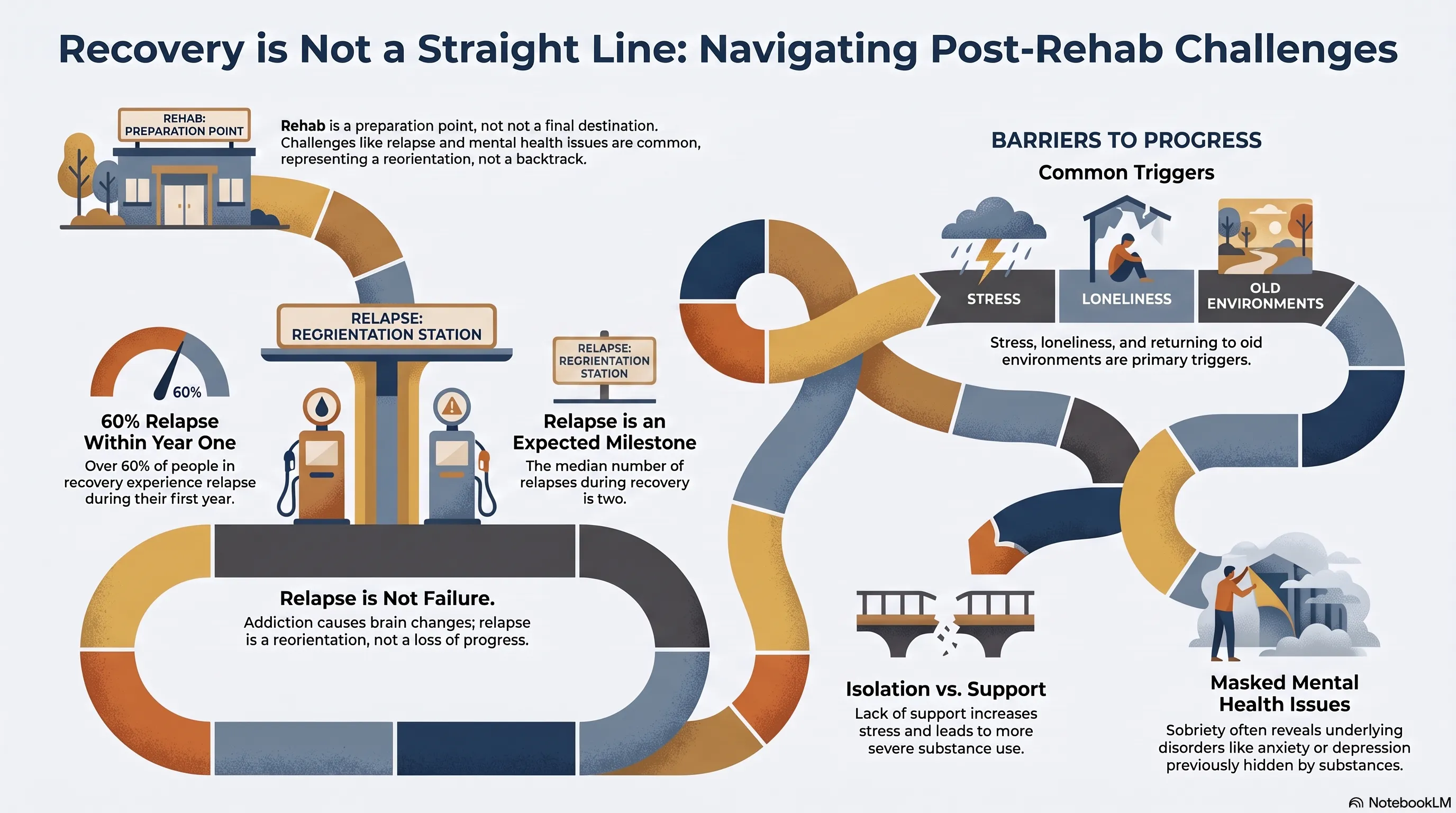
Rehab is like the gas station on your journey. You can take shelter there, stock up, and gather resources to help you on your way. But rehab alone doesn’t guarantee you arrive at your destination. It helps you find stability and prepares you for the next leg of the journey, but there’s a possibility that you’ll face challenges again when you leave.
The important thing to remember is that rehab doesn’t go anywhere and that fluctuations don’t equal failure. Below, I explain why some people get worse after rehab and why that doesn’t mean they can’t continue on their recovery journey.
The Risk of Relapse
Relapse is when a person begins using a substance again after a period of stopping. Many people assume that once they finish a rehab program, they will be able to maintain their progress and abstain from drug use. The reality though, is that relapse is not just a possibility, it’s expected for the majority of people.
Over 60% of people recovering from a substance use disorder (SUD) relapse within the first year [1]. Studies also suggest that the median number of times someone in recovery will relapse is two [2]. And, if you’ve relapsed before, you’re more likely to relapse again in the future [3].
It’s easy to think that relapse is the same as “getting worse”, but it’s not. Addiction leads to chemical changes in your brain that make abstaining from drugs incredibly difficult. If you relapse, you haven’t backtracked on the work that you’ve already done in rehab, you’ve just reoriented your journey. What matters most is seeking help as soon as possible after relapse.
Common Relapse Triggers
The stimuli for relapse can be external or emotional. They vary depending on you and your story, but common relapse triggers include:
- Stress
- Relationship troubles
- Visiting places with alcohol/drugs available
- Returning to places where you used substances
- Loneliness
- Boredom
- Low self-esteem
- Associative memories (e.g. seeing someone you used to use with)
Anyone in recovery is vulnerable to relapse, but if you meet any of the following criteria, you have a higher risk [4]:
- Have been using substances from a young age
- Are in poor physical health
- Have a co-occurring psychiatric disorder
- Are from a low socioeconomic background
- Have sleep disturbances
- Are a smoker
- Have experienced trauma
Lack of Support Systems
Support is crucial both during and after you finish rehab. Family, friends, and peers who are also in recovery or who understand recovery are your backbone at this time. You need them to provide you with consistent, safe spaces to talk about your recovery, seek advice, and gradually reintegrate into your daily routines. Without them, your recovery journey is lonelier and longer.
Isolation is dangerous. Not having sufficient, or the right, type of support has been linked to increased psychological stress, more severe substance use, and relapse. Meanwhile, having trustworthy support systems positively influences quality of life, well-being, abstinence, stress, and belief in the progress you made in rehab [5].
 Underlying Mental Health Disorders
It’s estimated that 21.2 million adults in the US have a co-occurring mental illness and an SUD [6]. Conditions such as depression, anxiety, and bipolar disorder often occur alongside addiction.
When you leave rehab, you may find that your mental health suffers. Not only are you processing your time in the program and adjusting to being back in the world, but without drugs, you may finally have the clarity to recognize thought patterns or behaviors that signal mental health issues.
Substance use may have been masking some of the symptoms, or you may develop a disorder following so many life changes. Poor mental health does not always mean that you are getting worse — it’s a normal response to an extremely challenging situation. Many rehab programs offer aftercare services specifically to help you look after your mental health, including group therapy sessions and outdoor activities.
How Recovery Protection Planning Helps
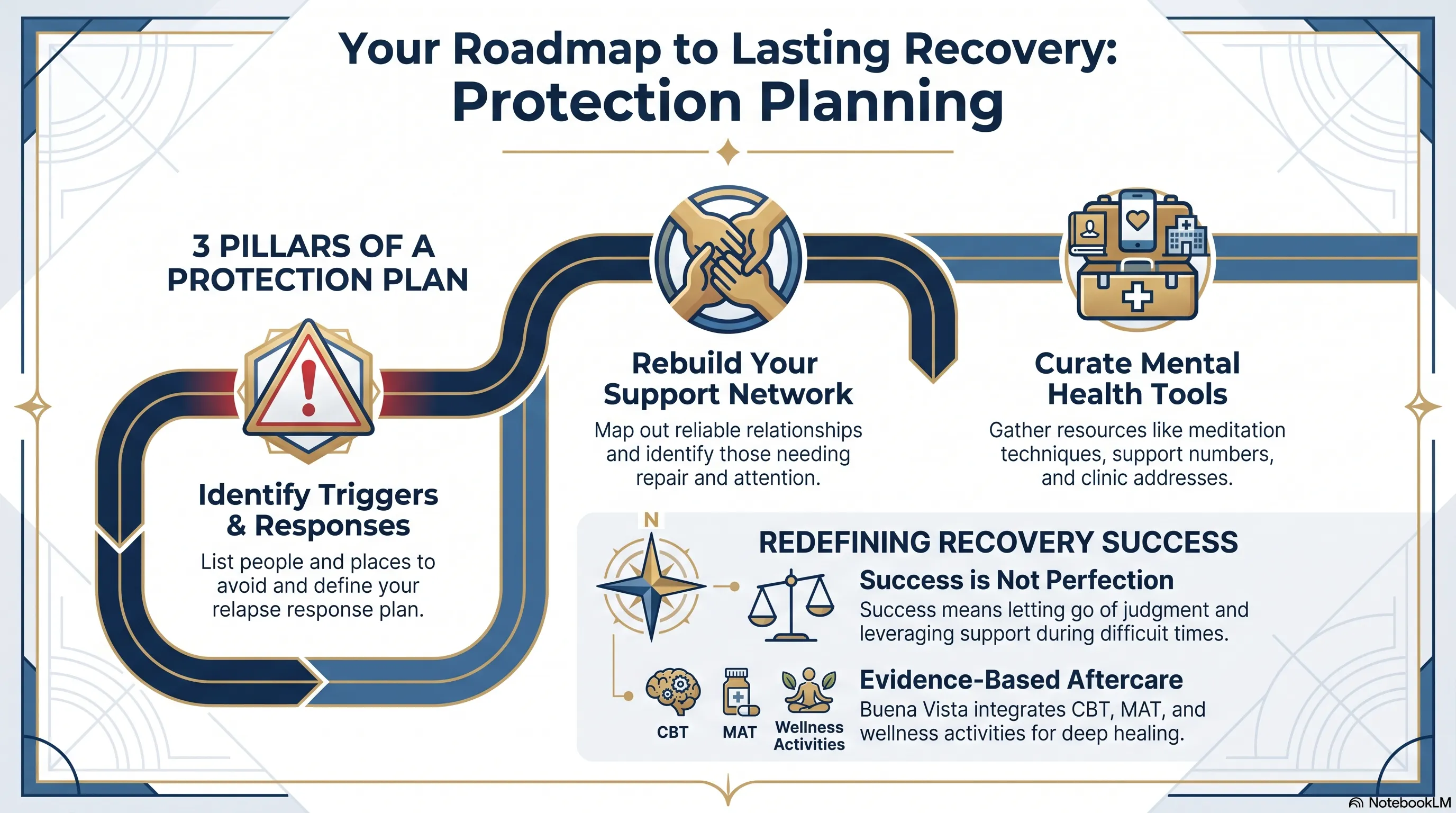
Recovery protection planning is a way to help you navigate the risk of relapse, to build and maintain support networks, and to nurture your mental health after rehab. All treatment in rehab integrates recovery protection, but you may also create a dedicated document or schedule check-ins with your care team as part of your planning.
Most planning includes:
Identifying your triggers and relapse response. You list the places, people, and feelings that could (or have) influenced you to use and how you will avoid or address them after rehab. You also specify what you’ll do if you relapse, for example, calling your clinician.
Retaining and rebuilding support structures. You outline the people who consistently show up for you and how you’ll keep them present in your life. You may also mention relationships that were damaged during your addiction and how you’d like to improve them.
Collecting mental health resources. You research and curate mental health practices and resources to use when necessary. These could include meditation and breathing exercises, local support phone numbers, and the addresses of nearby clinics.
Keep in mind that returning to rehab is always an option. Success in recovery isn’t finishing treatment on the first attempt, in one go, and never feeling bad or using substances again. Success means letting go of judgment, taking considered steps to be healthy, and leveraging support as often as possible.
 Compassionate Rehab and Aftercare Services at Buena Vista Health & Recovery Center
We’re a team of licensed clinicians who understand that recovery extends beyond the walls of rehab. Our addiction treatment integrates evidence-based therapies such as Cognitive Behavioral Therapy (CBT), Medication-Assisted Treatment (MAT) where needed, and wellness activities for deep healing during rehab. Our aftercare services ensure that you stay connected and confident in your recovery even once you’ve finished a program.
We tailor all care, during treatment and afterward, to best meet your current needs and hopes for the future. We work with empathy, and we understand that everyone’s healing timeline is different.
We’re really with you on your recovery journey. Contact our admissions team now.
Sources
[1] Mao, S. et al. (June 2024). A probabilistic model of relapse in drug addiction. Mathematical Biosciences.
[2] Kelly, J. et al. (July 2019). How Many Recovery Attempts Does it Take to Successfully Resolve an Alcohol or Drug Problem? Estimates and Correlates From a National Study of Recovering U.S. Adults. Alcohol, Clinical and Experimental Research.
[3] Domino, K. et al. (March 2005). Risk Factors for Relapse in Health Care Professionals With Substance Use Disorders. JAMA.
[4] Bülent Yazıcı, A. Raşit Bardakçı, M. (December 2023). Factors Associated with Relapses in Alcohol and Substance Use Disorder. The Eurasian Journal of Medicine.
[5] Islam, M. et al. (February 2024). The Importance of Social Support in Recovery Populations: Toward a Multilevel Understanding. Alcohol Treatment Quarterly.
[6] SAMHSA. (December 2025). Co-Occurring Disorders and Other Health Conditions. samhsa.gov.