Life in recovery
Court-Ordered Rehab in Arizona
Court-ordered rehab works like voluntary rehab, with court monitoring added. See what to expect, why judges order it, and how to prepare in Arizona.

Written byDarren Lee, M.A., LPC
Clinical Director
Updated
5 min read · Life in recovery
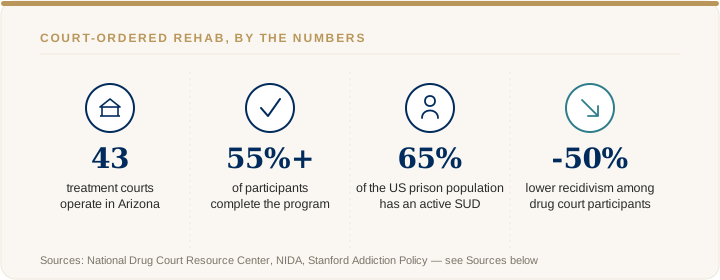
Court-ordered rehab is when a judge requires treatment for a substance use disorder (SUD), usually in place of or alongside jail time. Nationally, more than 90,990 people have participated in a treatment court program, and more than 55% have completed it [1]. In Arizona alone, 43 treatment courts operate across the state.
This kind of rehab offers the same transformative care as voluntary treatment, and it has been shown to help people abstain from drug use [2] and lower rates of reoffending — drug court participants see recidivism drop by as much as 50%, with re-arrest cut by roughly two-thirds compared to people who go through the standard court process [3].
Here’s what to know about court-ordered rehab in Arizona: what it is, why it’s assigned, and how to prepare. If your case involves a DUI specifically, see the benefits of enrolling in treatment after a DUI for a closer look at that path.
What Is Court-Ordered Rehab?
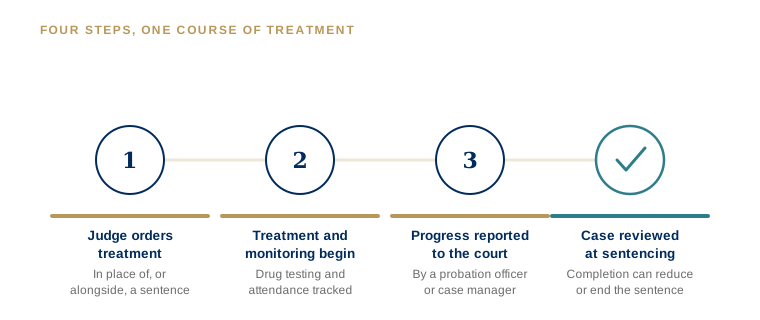
If a judge determines someone needs structured treatment for substance use, that’s court-ordered rehab. It is commonly used as an alternative to incarceration or as a condition of probation after a charge, as part of a broader framework of drug courts and treatment-focused sentencing [4].
During treatment, attendance and progress are monitored and reported back to the court. Participants are expected to remain abstinent, complete regular drug testing, and attend every scheduled session — missing this can mean a return to the standard sentence.
How long court-ordered rehab lasts depends on the case. The judge sets the duration and may specify where someone attends and what program they enroll in, whether that’s medical detox, residential care, or an outpatient program. Inpatient stays typically run 30 to 90 days; see how program length is decided for more detail.
Is Court-Ordered Rehab Different From “Normal” Rehab?
The clinical care in court-ordered rehab is the same as voluntary rehab. The only difference is that someone — a probation officer or a drug court case manager — verifies attendance and reports drug test results and progress back to the court. This person isn’t present during therapy sessions, though they may speak with the care team to understand how someone is responding to treatment.
Both court-ordered and voluntary rehab typically include:
- Evidence-based therapy. Individual and group sessions, often using cognitive behavioral therapy (CBT) and dialectical behavioral therapy (DBT) to address the thought patterns and trauma that fuel addiction.
- Medication-assisted treatment (MAT). Administered only when clinically needed, using FDA-approved medicines, usually to help taper off opioids or alcohol.
- Wellness activities. Yoga, meditation, breathing exercises, and other tools for managing distress and building emotional regulation.
Whether rehab is court-ordered or voluntary, most people move through at least one stage of the continuum of care:
- Medical detox to safely remove addictive substances from the body
- Residential care to stabilize and begin addressing the causes and triggers of addiction
- Outpatient programs to integrate recovery with independent living
- Weekly therapy to stay connected to progress with a less clinical focus
Continuing through the full continuum, rather than stopping after one stage, is associated with the best outcomes and the most sustained recovery.
Why Does Court-Ordered Rehab Exist?
65% of the U.S. prison population has an active substance use disorder [5]. When a court identifies an SUD as a clear factor in a case, treating the addiction can help someone heal while lowering the odds of reoffending — a result that benefits the individual, the prison system, and the broader community.
A judge isn’t required to order rehab over another sentence. Factors that influence the decision include:
- Whether substance use was connected to the offense
- The severity of the charge
- Previous criminal history
- Cooperation and remorse from the accused
- Availability of a rehab center and program
- Recommendations from addiction specialists involved in the case
How Can I Prepare for Court-Ordered Rehab?
Preparing for court-ordered rehab largely mirrors preparing for voluntary rehab, with a couple of added questions around insurance coverage and time off work. If you have health insurance, confirm whether the assigned center accepts your provider and plan — most commercial plans are accepted. Medicaid also covers rehab in Arizona when it’s medically necessary, and most insurers treat court-ordered rehab as meeting that standard.
If you’re employed, the Family and Medical Leave Act (FMLA) allows up to 12 weeks off for court-ordered rehab while keeping your position, as long as you’ve been with the company at least 12 months, worked 1,250 hours in the past year, and your employer has 50 or more employees within 75 miles [6].
Other ways to prepare:
- Pack comfortable clothes for your time in rehab
- Bring a valid ID
- Set up payments for bills due while you’re away
- Let people know about responsibilities you won’t be able to continue or fulfill
- Check the health center’s policy on phone and technology use
- Start a journal to track your thoughts and feelings before entering rehab
Research shows that feeling “ready” for rehab improves engagement with care and leads to better retention, which matters for both your recovery and your standing with the court [7].
Recover From Substance Use at Buena Vista Health & Recovery Center, AZ
We are specialists in addiction, providing care to people from all backgrounds who arrive at our center in Arizona for many different reasons, including a court order. We don’t judge, and we don’t change the quality of care based on how someone got here. We personalize our programs to individual needs and goals, and we work with empathy throughout.
Our team of licensed clinicians offers therapies including CBT and DBT, alongside MAT where appropriate, in private residences with your own room and bathroom and catered meals. Many of the people we admit under a court order go on to complete a full residential program, and some continue into ongoing alcohol or substance use care afterward.
Change is possible. If you work with the court system — as a probation officer, case manager, or attorney — see our referral page for how to place someone directly. If you’re the one facing a court order, contact our admissions team today.
Sources
- National Drug Court Resource Center. 2022. Painting the Current Picture: A National Report on Treatment Courts in the United States. ntcrc.org.
- Strauss, S., Falkin, G. 2001. The First Week After Drug Treatment: The Influence of Treatment on Drug Use Among Women Offenders. The American Journal of Drug and Alcohol Abuse.
- Stanford University. Drug Courts as an Alternative to Incarceration. addictionpolicy.stanford.edu.
- National Institute of Justice. 2020. Overview of Drug Courts. nij.ojp.gov.
- National Institute on Drug Abuse. 2020. Criminal Justice DrugFacts. nida.nih.gov.
- U.S. Department of Labor. 2025. Fact Sheet #28A: Employee Protections under the Family and Medical Leave Act. dol.gov.
- Joe, G. et al. 1998. Effects of readiness for drug abuse treatment on client retention and assessment of process. Addiction.